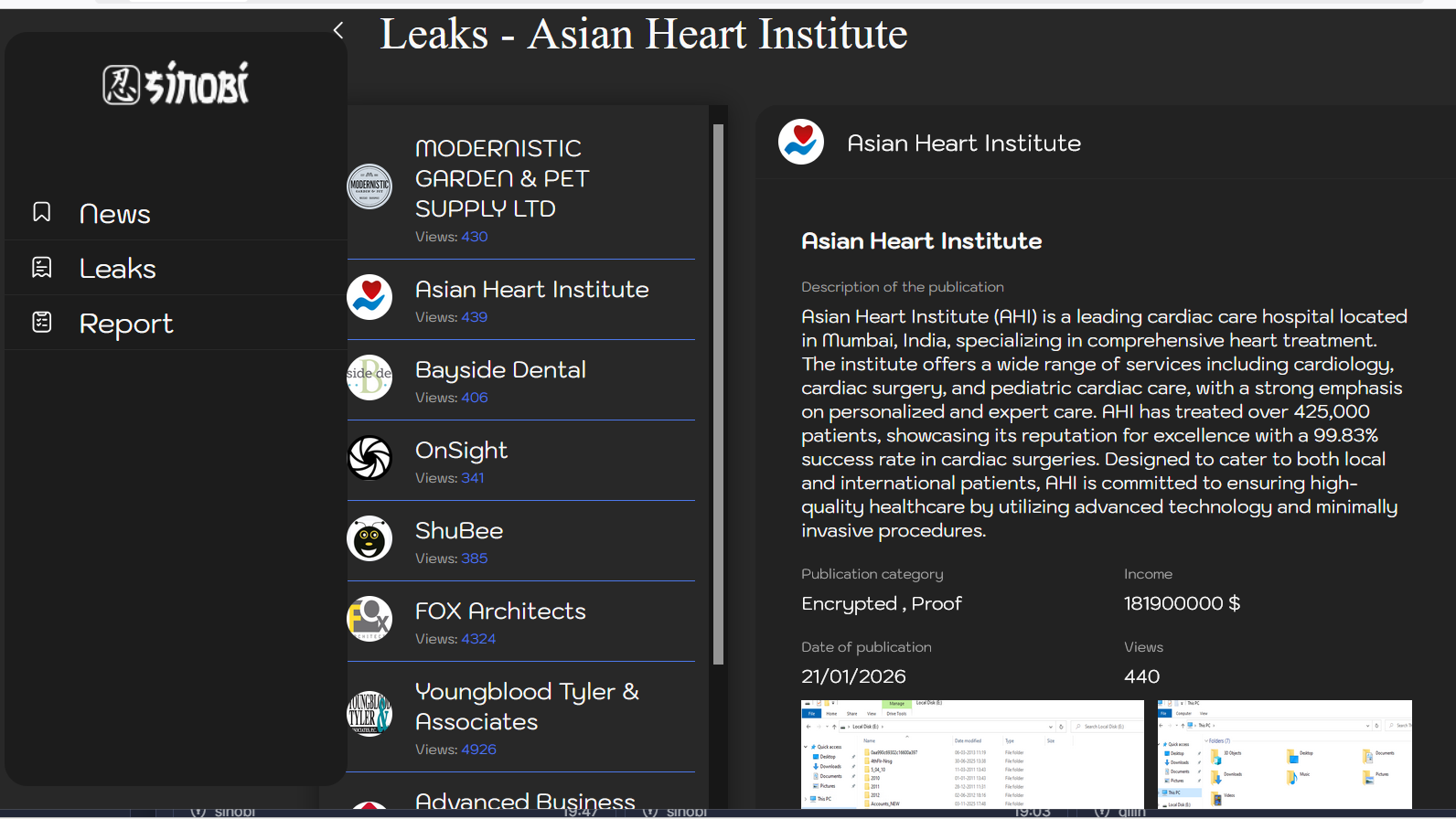
Asian Heart Institute Data Leak 2026: Serious Dark Web Exposure of 120GB Sensitive Hospital Data
Breaking News Overview
The Asian Heart Institute data leak has emerged as a serious cybersecurity incident after a large dataset allegedly linked to the Mumbai-based hospital was found circulating on the dark web. According to leak disclosures dated 21 January 2026, nearly 120 GB of sensitive data has been exposed, raising concerns about patient privacy, financial security, and institutional trust.
Healthcare cybersecurity experts warn that such incidents pose long-term risks, especially when medical and financial records are involved.
About Asian Heart Institute
Asian Heart Institute (AHI) is one of India’s leading cardiac care hospitals, located in Mumbai. Known for its focus on advanced heart treatment, the institute provides cardiology, cardiac surgery, and pediatric cardiac care services.
With over 425,000 patients treated and a reported 99.83% success rate in cardiac surgeries, AHI has built a strong reputation both in India and among international patients. The hospital uses advanced medical technology and minimally invasive procedures to deliver specialized care.
Timeline of the Data Leak
Based on the available disclosure details:
- Date of publication: 21 January 2026
- Leak category: Encrypted, Proof-based disclosure
- Estimated data size: 120 GB
- Leak source: Dark web platforms
- Income reported: USD 181.9 million
The leak appears to have been listed with proof files, indicating attackers possess access to the data even if it is partially encrypted.
What Data Has Been Disclosed
According to the disclosure description, the Asian Heart Institute data leak reportedly includes data across several sensitive categories:
- Confidential internal documents
- Financial and accounting data
- Contract and agreement records
- Customer and patient-related data
- Incident and operational records
While there is no official confirmation yet regarding misuse, the presence of such datasets on the dark web significantly increases the risk of unauthorized access and exploitation.
Why This Leak Is a Serious Concern
Healthcare data is among the most valuable targets for cybercriminals. Unlike passwords, medical and financial records cannot be easily changed. The Asian Heart Institute data leak could expose individuals to:
- Identity theft and fraud
- Medical data misuse
- Targeted phishing or extortion attempts
- Long-term privacy violations
For hospitals, reputational damage can be just as severe as regulatory penalties.
Impact on Patients and Operations
If confirmed, the leak may affect not only patients but also hospital operations and vendor relationships. Patients may lose confidence in data protection practices, while partners and insurers could demand additional security assurances.
Healthcare institutions are also subject to strict data protection and compliance requirements, making any breach a potential legal challenge.
Growing Cyber Threats to Healthcare
In recent years, hospitals have become prime targets for cybercriminals due to:
- High-value medical and financial data
- Complex IT infrastructure
- Dependence on legacy systems
- Limited cybersecurity budgets
The Asian Heart Institute data leak reflects a broader global trend where healthcare organisations are increasingly targeted on the dark web.










Post Comment